
Why is truck flow management strategic in industry?
In many industrial environments, several hundred trucks may circulate on the same site every day. Without a structured management system, logistics operations can quickly generate queues, administrative errors, or security issues.
Key industrial challenges:
Reducing carrier
waiting times

Securing access to
sensitive areas of the site
Traceability of
goods movements

Reliability of weighing
and loading operations

Coordination of logistics
flows with production
The digitalization of truck flows transforms the logistics management of an industrial site into an automated process driven by data and integrated with the company’s information systems.
Truck access automation on industrial sites
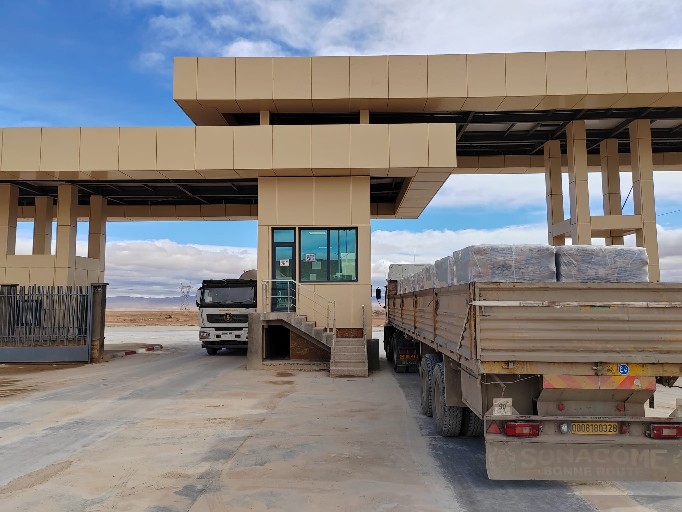
The PILOT Solution automates access control and vehicle identification in order to reduce manual interventions and accelerate logistics flows:
- Identification of transporters using RFID badges or QR codes
- Automatic license plate recognition
- Verification of transport information consistency
- Automated opening of access barriers
- Centralized management of logistics transactions
This automation reduces waiting times at the site entrance and improves the overall security of industrial infrastructures.
Automated weighing management and logistics traceability
The PILOT Solution integrates directly with weighbridges and your site’s industrial systems in order to automate the entire weighing process, enabling:
- Automatic recording of inbound and outbound weights
- Centralization of transport and weighing data
- Integration of information into your ERP or MES systems
- Full traceability of logistics movements
The digitalization of weighing operations reduces human errors, improves billing reliability, and facilitates administrative or regulatory inspections.
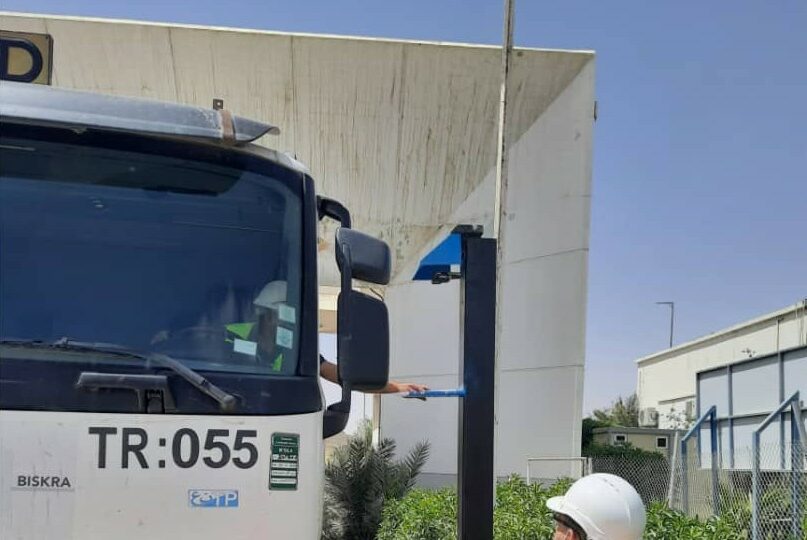
Logistics management and real-time flow monitoring
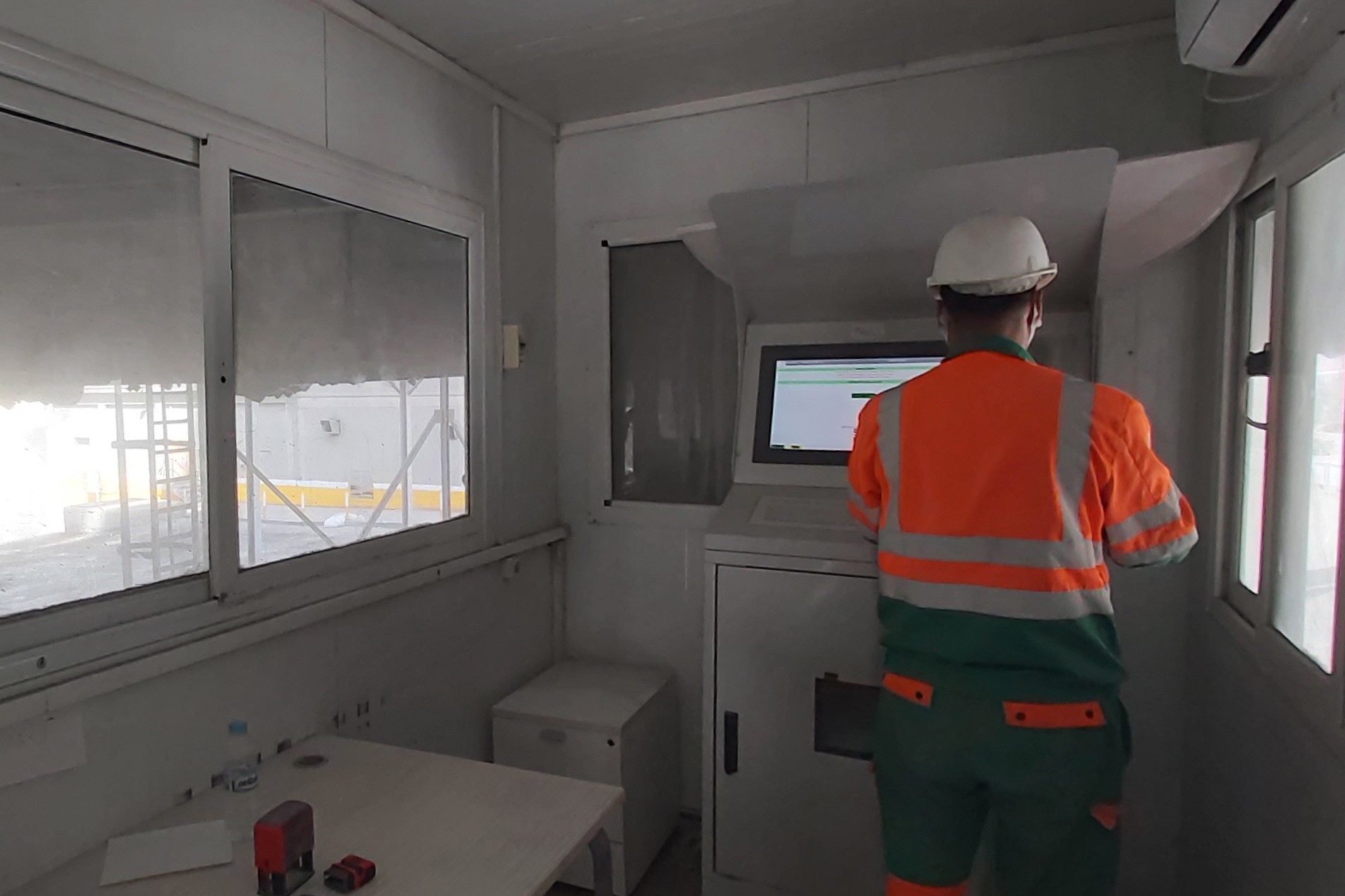
Thanks to the collection and centralization of logistics data, industrial operators gain a global view of transport flows on their site. The PILOT Solution enables:
- Real-time visualization of trucks present on the site
- Monitoring of loading and unloading operations
- Analysis of waiting times and logistics cycles
- Generation of dashboards and performance indicators
This information allows logistics managers to optimize flow organization and improve coordination between transporters, production, and logistics.
Discover our complete PILOT Solution
Managing truck flows at waste collection sites requires a robust,
interconnected solution designed for demanding industrial environments.
PILOT Solution combines industrial automation, logistics traceability, and data monitoring
to optimize truck circulation and the overall performance of industrial sites.
A direct driver of performance

Streamlining transport operations
Reducing waiting times and automating entry management improves vehicle rotation and limits congestion on your site.

Enhanced security for industrial sites
Automated access control secures sensitive areas and provides full traceability of truck movements.

Reliable logistics data
Centralizing transport and weighing data eliminates duplicate entries and reduces administrative errors.

Optimization of human resources
Automating repetitive tasks allows teams to focus on higher value-added activities.
Industrial sectors concerned
The PILOT Solution is used in various industrial environments characterized by high logistics flows.
It is particularly suited to:
Cement plants and
construction materials
Steel and
metallurgical sites
Chemical and
petrochemical industries
Industrial logistics
platforms
Food processing
industries
In these environments, automated truck flow management improves logistics performance and secures transport operations.
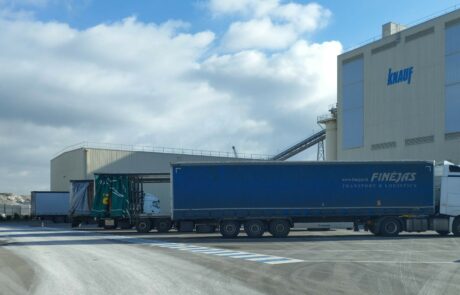
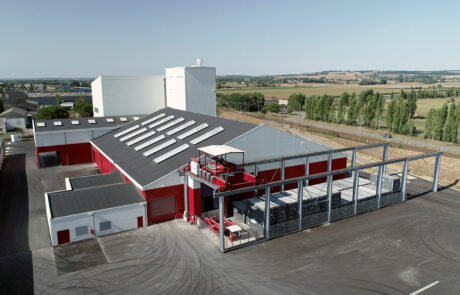
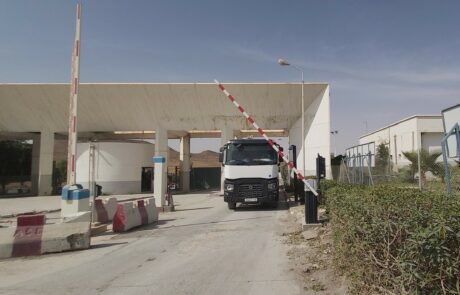
Case studies
Several integrated technologies

Ready-to-use industrial PL totems

Integrated QR/RFID/NFC reader

Ruggedised touchscreen panel PC

Integrated printer possible

Multilingual support